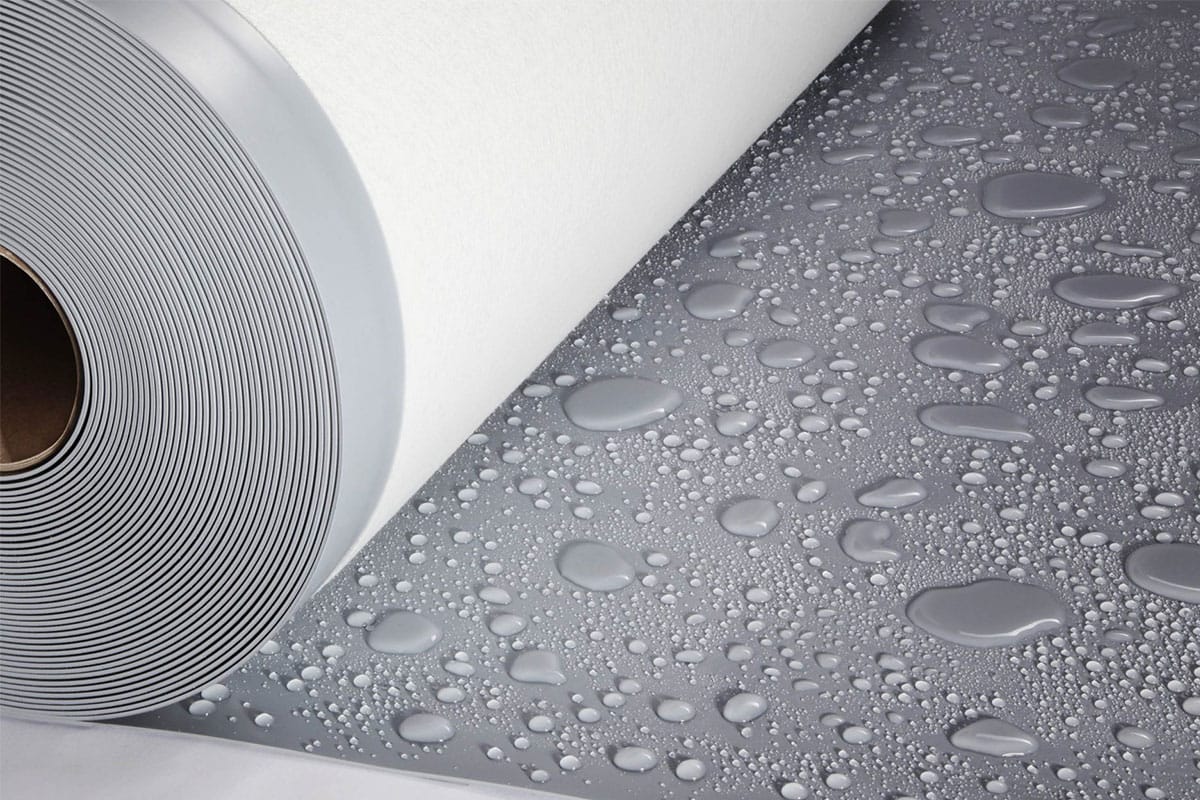
What are the waterproofing materials; these materials should be selected according to several criteria. The materials selected should be suitable for the amount of pedestrian traffic the area receives. If the area is a high pedestrian traffic area such as a commercial or industrial building, you should make sure that you choose the most durable waterproofing materials.
Which is the best waterproofing material; these vary according to the areas of use. The material considered as the best waterproofing material may not perform well in every area where it will be applied. For this reason, the waterproofing material suitable for its area should be selected. So if we ask “what are the best waterproofing materials” suitable for its area, there are different waterproofing systems for each area. It is necessary to correctly analyze which material will be used according to its area and for this, it is necessary to know the technical specifications of the material to be used.
Waterproofing materials vary according to the type of surface to be applied. Generally, some waterproof surfaces include wood, concrete and brick. Depending on the type of material, various applications may be required to maintain the thickness and durability of the material. You should also make sure that you choose a coating that is safe for your family and animals. If the waterproofing will be done inside your home, a non-toxic, environmentally friendly waterproofing formula should be preferred.
Waterproofing Methods
Type A waterproofing protection is defined as a barrier and is applied externally, bonded internally or sandwiched between two structural elements. Type A barriers are usually applied in advance, i.e. before the concrete is placed. Type A barriers can also be bonded membranes, liquid applied coatings or cement based waterproofing materials. A commonly used material for Type A waterproofing is a waterproofing primer that consists of a layer of bentonite clay. This self-healing membrane will stop groundwater from tracing between the membrane and the structure. It will also bond to fresh concrete when applied before the concrete is placed. This means that there is a permanent mechanical bond between the membrane and the concrete, which is essential if clay soil is a problem.
Type B waterproofing protection is provided by the waterproofing materials used in the design of the structure or the construction of the structure itself. Type B protection is achieved by constructing the structure with Hydro Concrete, a hydrophobic pore blocking concrete additive. This will provide a water resistant concrete. It is important to remember that any joints or seams will always be the weakest points and therefore the most susceptible to allowing water ingress.
Type C waterproofing protection is sometimes called a water management system and is a form of protection that is always applied from the negative side, that is, to the interior of the structure. Typically, type C protection is achieved by using a drainage membrane, which creates a gap between the wall and the membrane, allowing any water ingress to find its way to a sump pump and be transferred to a drain. This system includes hydrochannels and sump pumps, which are specifically used to transport water from the basement, usually to drains.
What are the Waterproofing Materials According to Application Areas?
1. Cement Based Waterproofing Material
 Construction of cement-based waterproofing is considered a problem-free waterproofing method. Mixing and using materials for cement-based waterproofing is very easy. This method is often preferred for interior wet areas such as bathrooms and toilets. This system is typically two-component mixtures used behind tiles, on wall patches and on concrete surfaces. These top and bottom class waterproofing materials have good adhesion to concrete and wall surfaces due to their cementitious structure and therefore strong bonding strength. The polymer modifier contributes to the flexibility properties.
Application Areas:
- Indoor and Outdoor Areas
- Wet Areas
- Retaining Walls
- Water Tanks and Swimming Pools
- Elevator Pits
- Metro Stations
- Tunnels
2. Crystalline Waterproofing Material
 Crystalline waterproofing is a capillary waterproofing formulation of proprietary chemicals, quartz sand and cement blends. The chemicals found in crystalline waterproofing materials require the presence of moisture to initiate a chemical reaction within the concrete matrix. These chemicals form chain complexes that crystallize and penetrate deeply into the concrete capillaries, eliminating the passage of water.
Application Areas:
- Wet Areas
- Water Tanks
- Elevator Shafts
- Subway Tunnels
- Underground Cellars
- Basements
- Retaining and foundation curtain walls
3. Bitumen Rubber Based Waterproofing Material

Liquid rubber bitumen liquid membranes are a polymer-modified bitumen-rubber emulsion. The bitumen-polymer mixture / liquid rubber coating has traditionally been offered on the market as a waterproof waterproofing coating. Recently, the liquid rubber coating has been further developed and can now be used for excellent sealing on a variety of surfaces.
The differences in the coatings are mainly in the viscosity and basis of the variant (natural base (latex) or artificial base (silicones)). It is environmentally friendly and designed to provide excellent waterproofing for roof structures. The unique features of the coating are that it is effective, easy to apply and cost-effective.
Liquid rubber coating is a widely used product for special purposes. There is no doubt about it: it is a very reliable sealant and coating that can be applied even on damp surfaces. This also makes it an excellent solution for large or industrial projects.
Application Areas:
- Retaining Walls, Basements and Cellar Walls
- Pot Planters, Garden Beds, Landscape Areas
- Water Tanks (suitable for galvanized, metal tanks)
- Gutter, Roof and Membrane Repairs
- Rust Prevention and Timber Rot Protection
4. Acrylic Liquid Membrane Waterproofing Material

Water-based acrylic waterproofing materials produced with modern technologies are simple and ready to use. They form an effective barrier against water and moisture to protect roofs, terraces and balconies from leaks and the negative effects of UV rays. Since the industry developed acrylic waterproofing materials, the waterproofing sectors have changed significantly. In general, waterproofing companies have immediately accepted and implemented these solutions, which simplify processes and at the same time guarantee correct and effective waterproofing without any waste of material. It also allows for unexpectedly easy cleaning of work areas and, most importantly for safety reasons, it is no longer necessary to carry and use gas tanks to burn traditional bitumen membranes.
Acrylic liquid waterproofing membrane is available in liquid form and is applied by brush or roller to the concrete surface, forming a thick, jointless membrane in contact with the air. It offers more flexibility than cementitious waterproofing types. The liquid turns into an elastic coating on the wall. The coating’s elongation properties can reach up to 280%. The durability of the coating depends on what type of polymer is used in the manufacture of the liquid waterproofing material.
Application Areas:
- Roofs and Terraces
- Underground Structures
- Basements
- Podiums
- Bridge Decks
- Tank Lining
- Wet Areas
5. Bituminous Membrane Waterproofing
 As a long-lasting waterproofing solution, bitumen waterproofing membrane is applied using bitumen-based sheets in a dry area. These are then melted onto the surface with a torch and rolled down to cover the roof or wall. Bitumen membrane is non-toxic, but requires precision and skill, especially in areas where joints meet. By spreading the descending layers of bitumen membrane evenly, a coating surface resistant to adverse weather conditions is achieved.
Bitumen Membrane Waterproofing is known for its long service life, reliability and exceptional waterproofing. The two main polymer modified bitumen membranes on the market are SBS and APP membranes.
SBS Membranes are made with bitumen modified with elastic Styrene-Butadiene-Styrene (SBS) polymers to create a “rubberized” asphalt pavement. The coating is applied to a fiberglass reinforcement carrier for high tensile strength, polyester for superior elongation and tear strength, or a composite of the two. SBS membranes offer excellent flexibility, especially in cold weather. SBS membranes are self-adhesive but are usually bonded with asphalt or cold adhesive.
APP Membranes are made with bitumen modified with plastic Atactic Polypropylene (APP) polymers. This results in a coating with the highest temperature range and increased durability and toughness. The coating is usually applied to a polyester carrier mat, although a small number of fiberglass products are also available. APP membranes are mainly applied with a torch due to the meltability of the plasticized bitumen.
Application Areas:
- Retaining walls, basements and underground structures
- Flat roofs under protective layers
- Underground car parks
- Bridges
- Raft slabs and foundations
6. Polyurethane-Injection Waterproofing
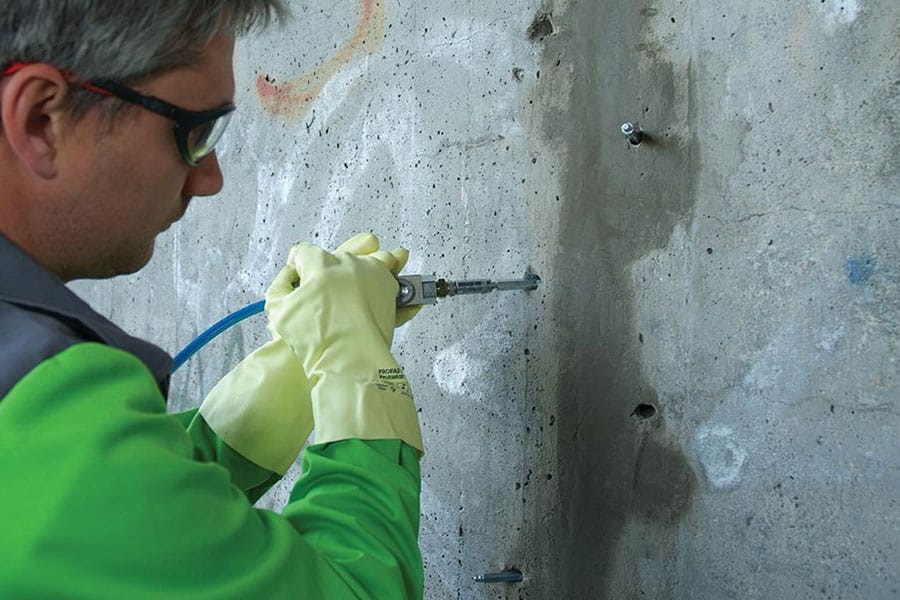
Grouting is a waterproofing technique that uses injected polyurethane that expands to prevent water from flowing through it, typically using voids or cracks in the concrete. This is particularly effective in solving water leakage problems when applied below the leak area or in the sub-floor ceiling where the leak is occurring. Once the polyurethane injection has entered an expansion process with the water, any cracks that are filled will have a mixture of water and a polymer foam type polyurethane mortar. The mixture will then expand until there is no more room to fill, successfully sealing the paths through which water has entered the material.
A hole will first need to be drilled into the underside of the ceiling to allow the polyurethane foam to be injected using a pressure washer. The pressure will cause the polyurethane to rise into the cracks or voids caused by water damage, which will then fill completely once expanded. Grouting is a recommended method for actively leaking cases involving concrete slabs.
Application Areas:
- Wet areas including toilets, showers and kitchens
- Concrete, tile or metal roofs
- Balconies and terraces
- Basements, foundations and retaining walls
- Water tanks
7. Epoxy Floor Coatings

Epoxy floors are water-resistant, stain-resistant, and can withstand contact with corrosive chemicals. This makes epoxy a great choice for high-traffic areas like residences, bedrooms, bathrooms, garages, and basements, as well as commercial showrooms and warehouses. Epoxy floor coatings can be cleaned quickly and easily with a mop and mild cleaning solution, providing a maintenance-free flooring option.
Epoxy floor coatings also create a seal that can prevent damage to the underlying concrete, which can be costly to repair. Epoxy floor coatings create a scratch-resistant surface that can withstand 7-20+ years of heavy use. Epoxy is also fire resistant, which is one of the reasons it is often used in industrial buildings.
Epoxy floors do not have any joints, wrinkles, or pores for dirt and bacteria to get into. As a result, pathogens and other microscopic organisms are less likely to spread in an epoxy-floored environment. Because epoxy creates a uniform surface, there is no need to clean grout or dirt that settles between the seams like with tile, wood, and vinyl flooring. This makes it a great choice for both commercial and residential use.
The shine of epoxy flooring creates a high-end surface that can be customized to suit a variety of styles and applications. Epoxy is available in a variety of colors to suit any design need. It can also be used to create a marble effect or combined with vinyl flakes for a speckled effect. Because of the many design possibilities, epoxy is a great choice for homeowners and businesses.
Application Areas:
- White Goods Coating Applications
- Steel Corrosion Resistant Coatings
- Metal Box and Container Coatings
- Flooring Applications
- Car Parks
- Hotels
- Industrial Floors
- Hospitals
- Manufacturing Facilities
- Aircraft Hangars
8. Polyurethane Liquid Membrane Waterproofing Material

Polyurethane Liquid Membrane waterproofing materials are formulated using monomers such as polyether polyol and isocyanate. This waterproof coating is applied to the horizontal surface to resist moisture. The treated surface tends to react chemically with the moisture present in the air to produce elastomeric rubber based waterproof membranes.
The waterproofing system of polyurethane liquid membrane is used in flat roof area and has a wide openness to weather conditions. Polyurethane liquid membrane waterproofing system is quite costly compared to other waterproofing systems. However, it is the best waterproofing material in the industry. Higher durability can be achieved with polyurethane liquid membrane. Polyurethane is very sensitive to moisture content. Therefore, the moisture content of the concrete slab should be evaluated very carefully before application. Otherwise, the membranes may peel off or debond after some time.
Application Areas:
- Roofs, Terraces and Balconies
- Water Tanks, Ornamental Pools and Swimming Pools
- Bridges
- Parking Areas
- Concrete Structures
- Decks
9. Polyurea Spray Coating

Polyurea is the latest development in coating technology that provides the best in the world. Its extreme durability is 20 times stronger than some epoxy coatings. Polyurea will not crack or peel. It is highly resistant to salt, oil, fuel and other harsh chemicals. It is 98% more flexible than epoxy, allowing for natural concrete movement. It has been used for over 25 years in industrial applications such as pipe/pipeline coatings, tank linings, water treatment plants, sewer linings and automotive moldings. It cures in 5-15 seconds and must be sprayed for proper installation. This type of coating was originally developed and used in the early 1990s.
Polyurea forms a very strong bond with concrete due to its chemical structure. It has the ability to expand and contract with the change in surface and the underlying ground temperature. This means no chipping, cracking or hot tire pickup. Hot tire pickup occurs when a car’s tires are hot from driving; the heat and pressure from the tires can melt or peel the paint or coating, separating it from the ground. However, Polyurea is a “hard” surface that is highly resistant to abrasion. It retains its color and will not fade or yellow when exposed to direct sunlight.
Polyurea Coating can be applied at temperatures ranging from 4°C ~ 49°C. This is important because most waterproofing applications are not performed in a climate-controlled environment, allowing for greater flexibility in deciding when to install the coating. Polyurea cures much faster than other polymer-based coatings. It is typically suitable for pedestrian traffic on the floor 4-8 hours after installation, and for heavy vehicle traffic 24 hours after installation.
Application Areas:
- Roofs and Terraces
- Landscapes
- Pipeline Coatings
- Tank Paints and Coatings
- Floors and Walls
- Structural Steel
- Automotive Moldings
- Bridge Coatings
Waterproofing Application Areas
1. Wet Areas Waterproofing

Waterproofing wet areas such as toilets, bathrooms, kitchens and balconies is critical due to the constant use of water. Leak points are weak areas such as wall joints, joints between cisterns and pipes, and faulty pipe materials that corrode. If moisture spreads from the floor or walls into the concrete, it can cause extensive damage to the reinforcement embedded in the concrete. Therefore, it is important to have an impermeable barrier on the concrete to prevent moisture from spreading.
There are systems specifically designed for any wet area: bathrooms, kitchens or toilets. These are acrylic-based elastomeric waterproofing materials that protect wet areas from constant water leaks.
2. Terrace Waterproofing

Terrace waterproofing requires adequate protection of the concrete substrate and provision of a sloped surface for effective drainage of water. The waterproofing membrane must also protect the parapet walls.
Highly sustainable in all climatic conditions, including the adverse effects of pedestrian traffic and UV rays, highly resistant to long-term weather conditions, highly durable polyurethane liquid membrane waterproofing materials are frequently preferred systems in terrace structures and are the best waterproofing materials.
3. Roof Waterproofing
 The waterproofing materials to be used on roofs can vary depending on the structure of the roof. When looking at ways to waterproof a concrete roof, waterproofing membranes are considered the most important aspect of the roof system because they are key to keeping water out of the building. There are different types of roof membrane systems on the market. Therefore, it is important to choose the right system for you and your construction needs and understand the differences.
4. Basement Waterproofing
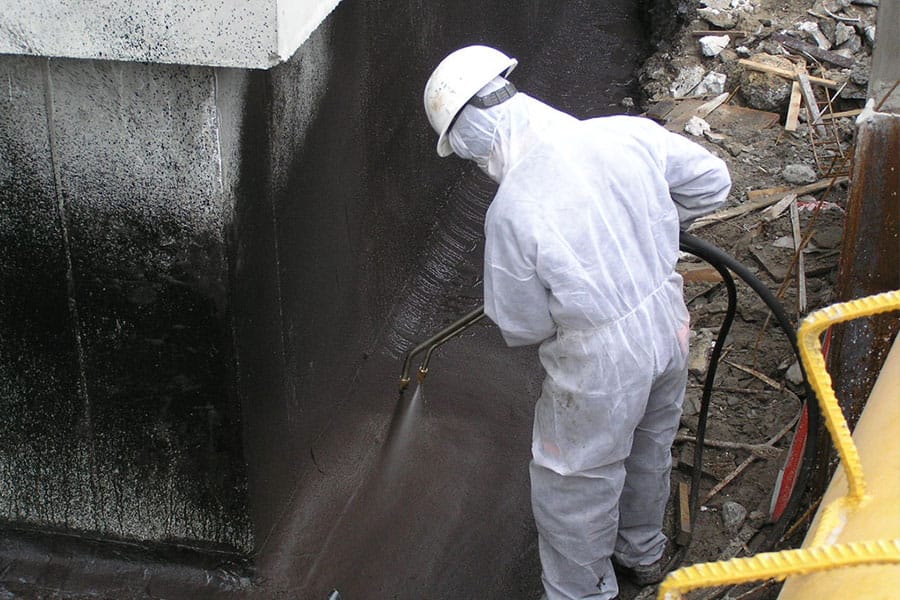
Positive: Positive side waterproofing is performed on the retaining wall face that is in direct contact with the water source. It is the most effective waterproofing solution as it is designed to block the initial water ingress and thus prevent further leakage.
Negative: Negative side waterproofing is performed on the inside of the structure, i.e. on the retaining wall face that is not in contact with the water source. One of the biggest advantages of this type of waterproofing is its accessibility, as any repairs and updates to the waterproofing system after construction can be easily installed. No removal and replacement of the surrounding soil is required.
5. Foundation Curtain Wall Waterproofing

Waterproofing curtain walls is crucial to maintaining the safety, comfort and thermal performance of the building and its occupants. Although rain presents the greatest challenges to the waterproofing specialist, especially since it is driven by the wind, other factors such as condensation must also be taken into account. Gravity, kinetic energy, air pressure differences, surface tension and capillary action act as a means for water ingress into buildings. This section discusses the natural forces acting on a curtain wall and some solutions used by various systems to maintain the waterproof integrity of the building.
Underground and foundation curtain wall waterproofing should be done at once according to the project details. The main principle of foundation and underground waterproofing applications is drainage insulation systems. Drainage can minimize water leaks and also provide a dry surface during application. However, an important point is that the main function of drainage in foundation waterproofing systems is to minimize water pressure. Waterproofing of foundation curtains should be provided with bitumen-based waterproofing materials and bitumen membrane waterproofing membranes. If there are bundling membranes coming from the foundation structure, they must definitely be combined with curtain waterproofing.
Bitumen-based waterproofing materials should be preferred in curtain insulations because they are jointless and do not leave any gaps between them and the concrete. Bitumen-based waterproofing materials are extremely resistant to alkalis in the soil. After the completion of the waterproofing process, XPS thermal insulation foam (Extruded Polystyrene) and drainage board should be used as a protective layer to protect it from damage by excavation.
6. Exterior Waterproofing

Masonry surfaces, such as external walls, are among the largest surface areas exposed to weather conditions such as rain, dust, UV rays and fungus. Waterproofing (sealing) of external walls is usually achieved by adequate water thickness, waterproofing, proper design of construction joints, surface treatment and surfaces acting as a barrier against water ingress. If external walls are not waterproofed, this can result in damp walls, which are perfect breeding grounds for invading mould and moisture. This damages the walls and leads to health problems for the occupants.
The coating must combine the properties of efficient waterproofing and aesthetics. Acrylic-based waterproofing materials that provide protection against UV radiation and also work as elastomeric waterproofing coatings are suitable for external walls.
7. Waterproofing of Landscape Areas

Landscaped areas need waterproofing systems that are ‘anti-root’, preventing plant roots from penetrating the concrete surface.
Bitumen-based waterproofing materials have root-resistant properties and are extremely suitable for landscaped areas.
8. Waterproofing of Water Tanks
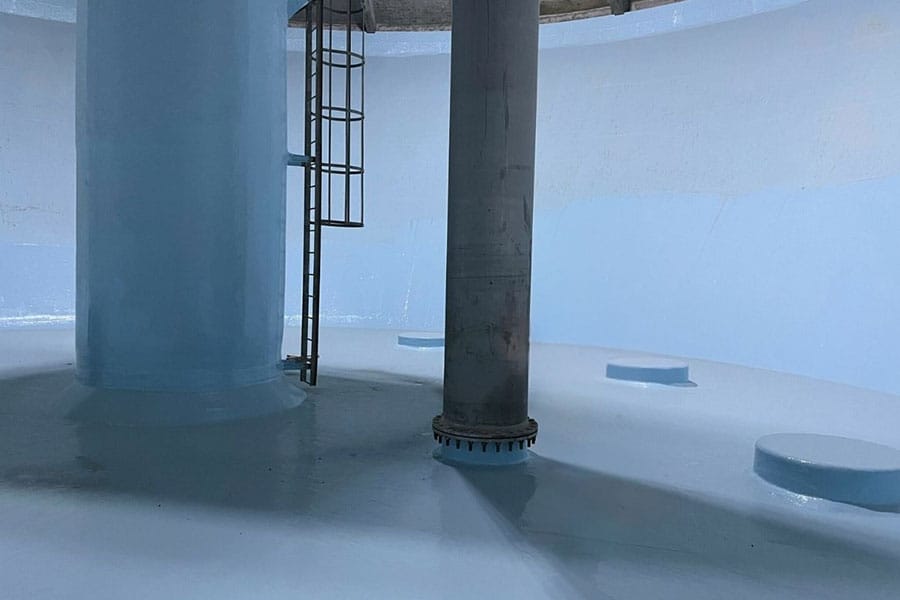
The average lifespan of a concrete water tank is 10 to 15 years. During this time, the interior concrete walls must withstand varying degrees of constant hydrostatic pressure. They may also come into contact with chlorine and other chemicals that soften their surfaces. Areas of concern include: cold joints, penetrations, shrinkage cracks and leakage voids.
Crystalline waterproofing materials provide a strong barrier against the effects of constant chlorinated water pressure, while epoxy coatings provide water portability.
9. Pool Waterproofing

Swimming pools are a popular recreational option these days. However, they need to be well maintained to prevent leaks. Factors that can cause leaks include:
- Shrinkage cracks that occur during the concrete curing process
- Lack of waterproofing barriers between the pool water and the concrete wall
- Cracks that appear in joints (filled with cementitious grouts) over time
- Faults in plumbing and suction lines
- Honeycomb formation during the concreting process, weakening the structure
We offer a double protection system with Crystal Armor for walls, floors and construction joints. Weak areas such as construction joints and cracks are again coated with an additional layer of high elastomeric acrylic coating.