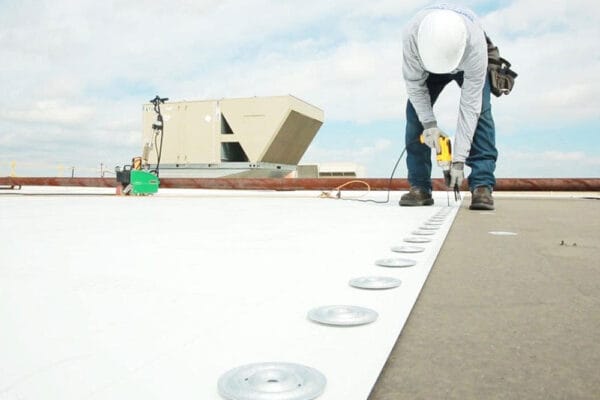
It provides cost-effective, flexible, versatile, reliable, positive waterproofing against harmful moisture migration and free water leakage in areas such as foundations, basements, roofs, retaining walls, etc. by using membrane types and membrane coating types such as PVC, APP, EPDM, TPO, SBS Bitumen. It also offers a fast and easy-to-apply system for maximum productivity.
What are the Advantages of Membrane Coating?
- A range of specially designed membranes help to meet and maintain the maximum floor moisture required by flooring industry specifications and is available in a low temperature version. This superior range of membrane coatings surpasses the waterproofing properties of other sheet membranes or liquid coatings for all job specifications including floor tiles, underlays, windows and roofing.
- Membrane coatings are ideal even for inverted roof type as damp proof under plain cement concrete, foundations, bridges, basements and underground works. It is unsurpassed in waterproofing of swimming pools, tanks, reservoirs, under tiled roofs, for agricultural areas, gardens and greenhouses etc.
- The membrane coating is a plastic reinforced bituminous waterproofing layer consisting of multi-layer plastic, modified bitumen and polyester/fiber glass mat. The membranes have a central core of high molecular weight high density polyethylene which is waterproof in itself. Since the product is plastic based, the effectiveness of the system does not wear out over time. The plastic does not degenerate or deteriorate and the system is expected to operate for at least 20 years.
- The membrane range has extreme temperature resistance and very good elongation to absorb all structural movements. With high tensile strength, the membrane is extremely flexible and suitable for conforming to contours.
What are the Membrane Types?
1. APP Membrane Coating

APP Membrane varieties use polyester reinforcement or fiberglass reinforcement as the original source, APP, APAO as the modifier and cover the waterproofing materials as polyethylene, sand or gravel. The APP (Atactic Polypropylene Plastomeric) type consists of a specially formulated bituminous composition of distilled asphalt modified with selected high-grade viscoelastic polymers and reinforced with a high-quality non-woven 300 g polyester carrier. The APP membrane is covered with a sanded top surface coating, while the bottom surface is protected with an embossed and heat-sensitive polyethylene film. This type of coating for the bottom surface was chosen for two specific purposes.
APP modified bitumen is a plastic bitumen mixture modified using plastic in the form of atactic polypropylene (APP). When the installers start torching APP, this type of plastic starts to melt at a point of 148 °C, where it melts into a liquid wax-like substance that then acts as an almost free-flowing liquid that can be wiped across a surface. APP has a high temperature tolerance when heated, so is more user friendly for installers. This ease of melting makes APP bitumen popular on smaller roofs such as residential properties and commercial flat roofs.
2. EPDM Membrane Coating
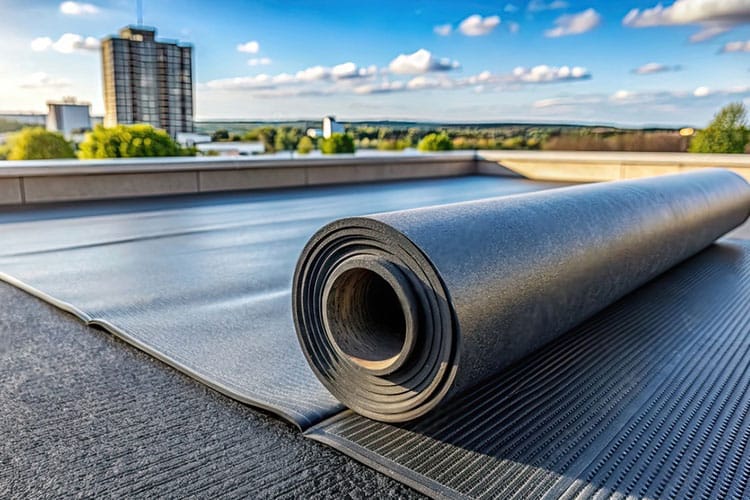
EPDM Membrane is a lightweight, durable and weatherproof single-ply waterproofing membrane perfect for a wide range of applications. It has been proven for over 20 years to withstand extreme temperature fluctuations and constant exposure to direct sunlight. It also has exceptional flexibility and will not split or crack under normal building movement. EPDM waterproofing membrane is an effective and high-performance waterproofing system with a 100% waterproofing function for contemporary structures.
EPDM is elastic and tear-resistant at low temperatures. EPDM roof sheets can be processed over pipes and slopes in all weather conditions and fit neatly around such projections. Furthermore, EPDM membrane varieties do not require sun protection as they are resistant to UV rays and normal precautions can be taken to reduce heat transfer through the roof structure, i.e. the insulation.
Typical installation methods for EPDM include loose-laid ballasted, mechanically fixed and fully bonded systems. Since there is no heat or open flame associated with the installation of EPDM roof systems, they are generally considered easier and safer to install. The seams along the edges of the EPDM sheets are typically glued using a seam tape or a liquid adhesive supplied by the manufacturer.
3. TPO Membrane Coating

TPO membrane, a new type of waterproofing material produced using polymer manufacturing technology, combines both polypropylene (plastic) and ethylene-propylene (rubber). TPO membrane varieties without plasticizers provide long-term flexibility. The result is an ideal commercial waterproofing membrane that is reliable, cost-effective, environmentally friendly and easy to install.
TPO Membrane (thermoplastic polyolefin) is a single-ply reflective roofing membrane. It consists of polypropylene and ethylene-propylene rubber polymerized together to form what we call TPO. This synthetic membrane coating comes in a variety of thicknesses and sizes. Generally, customers can find it in the market in thicknesses of 45 to 80 mils. TPO is generally available in only three colors, white, gray and tan. If you want to get a cool roof that is energy efficient, you can choose the white color, which effectively reflects solar energy. This also reduces the impact of the building’s energy consumption.
4. Firestone Ultraply TPO Membrane Coating

Firestone Ultraply TPO Membrane is a flexible, environmentally friendly, fast to install and safe to use high performance Thermoplastic PolyOlen roofing membrane made from an ethylene propylene rubber incorporating a polypropylene matrix and reinforced with a polyester weft.
Committed to providing exceptional quality and optimum environmentally friendly waterproofing solutions. Benefits range from heat reflectivity and energy efficiency to environmentally friendly roofing systems.
Suitable for a variety of low slope roofing applications, Firestone UltraPly TPO Membrane is a sustainable roofing solution for a wide range of building types. Firestone UltraPly TPO membrane also offers a reflective white, tan or grey panel design option that can help reduce a building’s cooling requirements. White and tan UltraPly TPO membranes meet the National Energy Efficiency Standards for Residential and Non-Residential Buildings. These standards define cool roofs as having a minimum three-year aged reflectance of 0.55 and a minimum thermal emittance of 0.75 for low-slope non-residential buildings.
5. PVC Membrane Coating
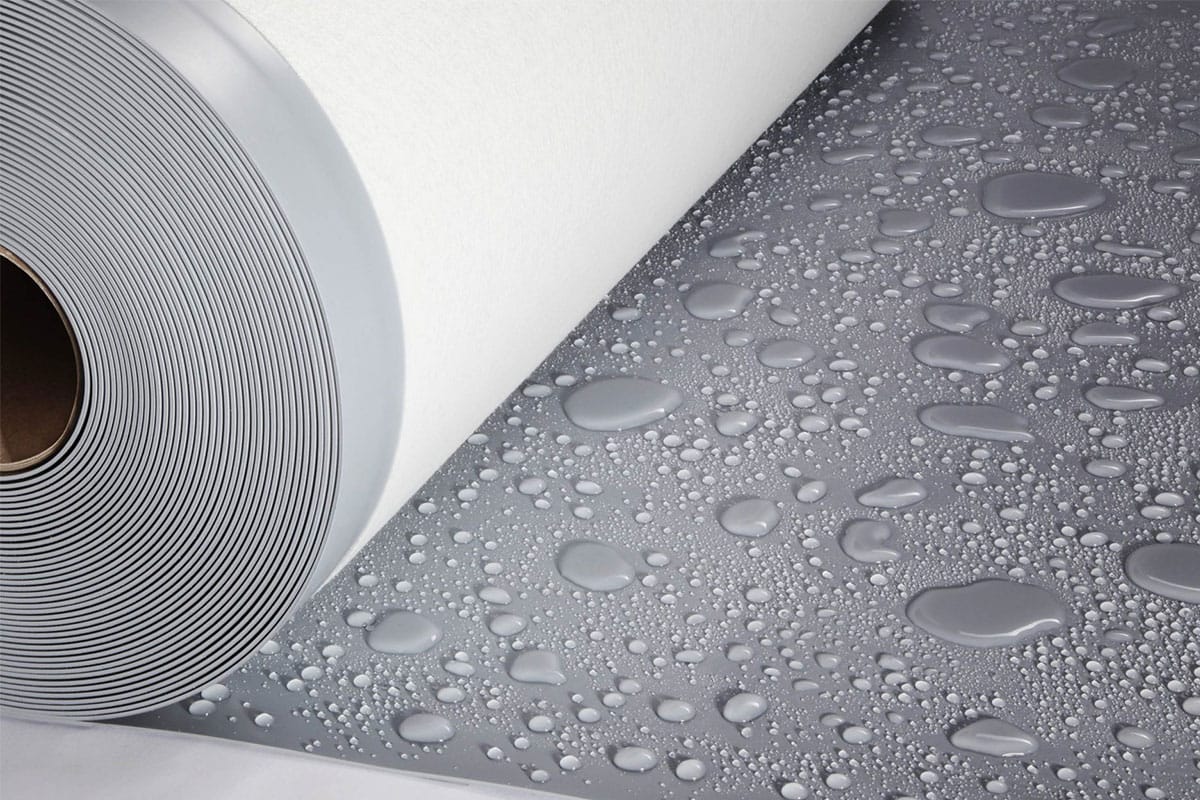
PVC Thermoplastic Waterproofing Membrane is a high polymer waterproofing material processed by mixing plasticizers, UV absorbers and other additives using Polyvinyl Chloride Resin (PVC) as the base material. It is a polyester reinforced material that provides the high tensile and tear strength required to prevent excessive elongation and sheet deformation under stresses generated by the membrane being lifted under wind loads.
PVC Membrane is a single-ply roof membrane coating used on commercial or industrial roofs. Similar to other membrane roof coatings such as TPO and EPDM, PVC can be applied over existing roofing materials for an environmentally friendly roof restoration. It is an excellent choice for creating a durable, waterproof coating for flat and low-slope roofs.
PVC membrane varieties are a cost-effective alternative to traditional roofing systems and can be produced in a variety of colors to coordinate with individual building project needs. Produced in bright white, this flexible fabric membrane reduces radiant heat gain and keeps interior temperatures cooler in warmer weather.
6. SBS Bituminous Membrane Coating

The SBS Bitumen Membrane range is a high performance rubber modified bitumen membrane reinforced with a combined reinforcement (polyester and fibreglass). The exceptional elongation properties of the SBS bitumen membrane, combined with the strength and dimensional stability of the reinforcement, provide an excellent waterproofing membrane for new and existing structures. The SBS is covered with a sanded or top surface coating, while the bottom surface is embossed and protected with a heat-sensitive polyethylene film.
The SBS-Modified bitumen membrane consists of synthetic rubber modified bitumen by adding styrene-butadiene-styrene (SBS). This does not melt in the same way as APP, instead it offers a ‘sticky’ melt that becomes hotter. This lack of liquid flow takes less heat compared to APP and provides a faster installation. SBS systems can also be installed with cold adhesive in projects where open flames are not allowed.
Due to the rubber used in its structure, SBS bitumen is more flexible than the plastic used in APP. This flexibility means it has recovery properties that enable it to withstand the stresses created by wind, temperature fluctuations and expansion and contraction. As well as faster installation times, SBS bitumen is unaffected by oxidation or ageing.