Metal roofs are lightweight and fast-to-install systems. However, connection points, fastener holes, overlap details, and thermal expansion movements that occur over time create areas vulnerable to water infiltration. Once problems begin, the risk extends beyond a simple leak and can threaten operational continuity.
For this reason, selecting a roofing system for metal roofs is not simply about covering the surface. The integrity of the entire system must be ensured.
When properly engineered, PVC-based synthetic membranes provide a controlled and testable waterproofing solution for metal roofing systems.
Most Common Problems on Metal Roofs
- Leaks around fastener points
- Openings at overlap joints
- Movement caused by thermal expansion and contraction
- Delamination of aging roof coatings
- Wind uplift risks
Metal surfaces are dynamic. They heat up, cool down, and expand. Systems that cannot accommodate these movements gradually weaken over time.
How Does PVC Membrane Perform on Metal Roofs?
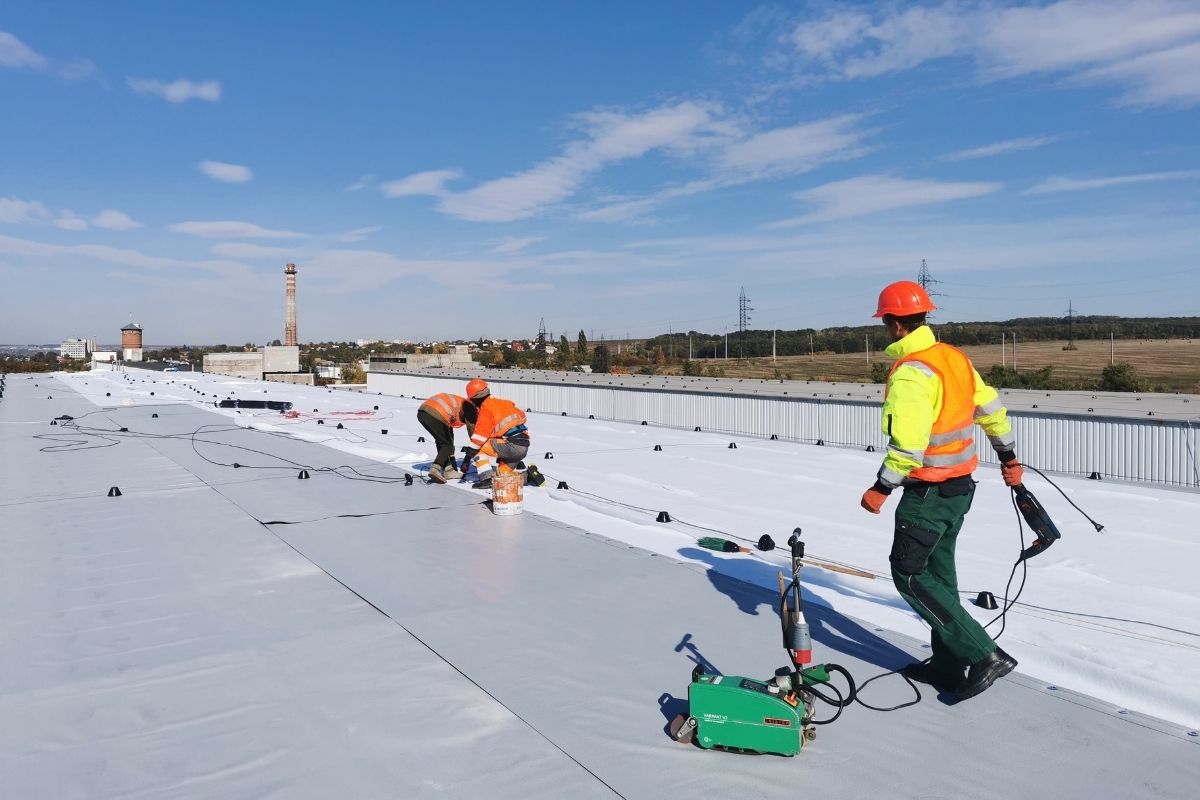
PVC membrane systems are installed over metal roofing substrates using project-specific detailing solutions.
- Can be mechanically fastened
- Seams are joined using hot-air welding
- Provides consistent membrane thickness
- Offers controlled flexibility on moving substrates
This structure allows the membrane system to accommodate the movement of the metal roof while preventing weak points at connection details.
Suitable Metal Roofing Applications
- Trapezoidal metal sheet roofs
- Applications over sandwich panel roofs
- Industrial warehouse roofs
- Logistics facility roofing systems
- Renovation projects for aging metal roofs
Each project requires its own fastening strategy and detailing solution. There is no standard, one-size-fits-all application.
Application Process
Metal roofing projects require a disciplined approach.
- Panel condition evaluation
- Inspection of fasteners and connections
- Review of the structural support system
- Wind load assessment
- Mechanical fastening design and engineering
- Surface preparation
- Membrane installation
- Hot-air welded seams
- Parapet and drainage detailing
- Weld integrity testing
- Joint inspections
- Technical report before project handover
The application is carried out by our own installation teams. The entire process remains under control and is delivered with a 5-year warranty.
What Does a 5-Year Warranty Mean?
Metal roofs are dynamic systems. A warranty cannot be sustainable unless these movements are properly analyzed and addressed.
The warranty demonstrates that:
- The correct fastening strategy has been implemented
- All welded seams have been tested
- Critical detailing points have been reinforced
- Application standards have been maintained throughout the project
Risk Assessment
Even a minor leak around a fastener can trigger a chain reaction of damage:
- Interior water intrusion
- Electrical panel risks
- Damage to machinery and equipment
- Production losses
- Unplanned maintenance expenses
For this reason, roofing decisions should be made before failures occur—not after.
Request a Technical Assessment
Metal roofing systems are not all the same. The correct solution cannot be determined without evaluating the panel type, roof slope, total area, and existing conditions. Request a technical assessment to protect your building in the long term and ensure operational continuity.
Consider your metal roofing system not as an expense, but as an investment in facility protection and operational security.
 Contact us directly by phone0212 284 4045
 Get a quick preliminary assessment via WhatsApp
 Request consultation and a technical site survey