“`html
Terrace areas are among the zones where water accumulates the most and waterproofing defects become visible the fastest. If there is a living space below, the risk increases; whether it is an office, apartment, or social area, once leakage begins, both the structure and the users are affected.
Choosing the right system for terraces is not only about stopping water, but also about ensuring long-term surface safety. PVC-based synthetic membranes offer a controlled solution, especially for low-slope and large terrace areas. However, the result depends more on detailing and application discipline than on the material brand.
Most Common Problems on Terraces
- Water accumulation and ponding
- Openings at parapet junctions
- Leaks progressing beneath floor coverings
- Blistering of old liquid-applied systems
- Cracks caused by temperature differences
These problems usually progress beneath the surface and are noticed late. The longer the intervention is delayed, the higher the cost becomes.
Why Is PVC Membrane Preferred on Terraces?
Terrace applications require a controllable system. The main features of this system are:
Which Terrace Types Is It Suitable For?
- Residential terraces
- Shared terrace areas in residential complexes
- Commercial building terraces
- Terraces above parking areas
- Roofs above technical rooms
Not every terrace is the same. The function of the area below, the type of surface covering, and the slope condition are decisive factors in system selection.
Application Process
For a reliable result, the process starts with technical analysis.
- Inspection of the existing covering
- Moisture measurement
- Slope and drainage assessment
- Required repairs
- Creating a proper substrate
- Preparation of edge and junction details
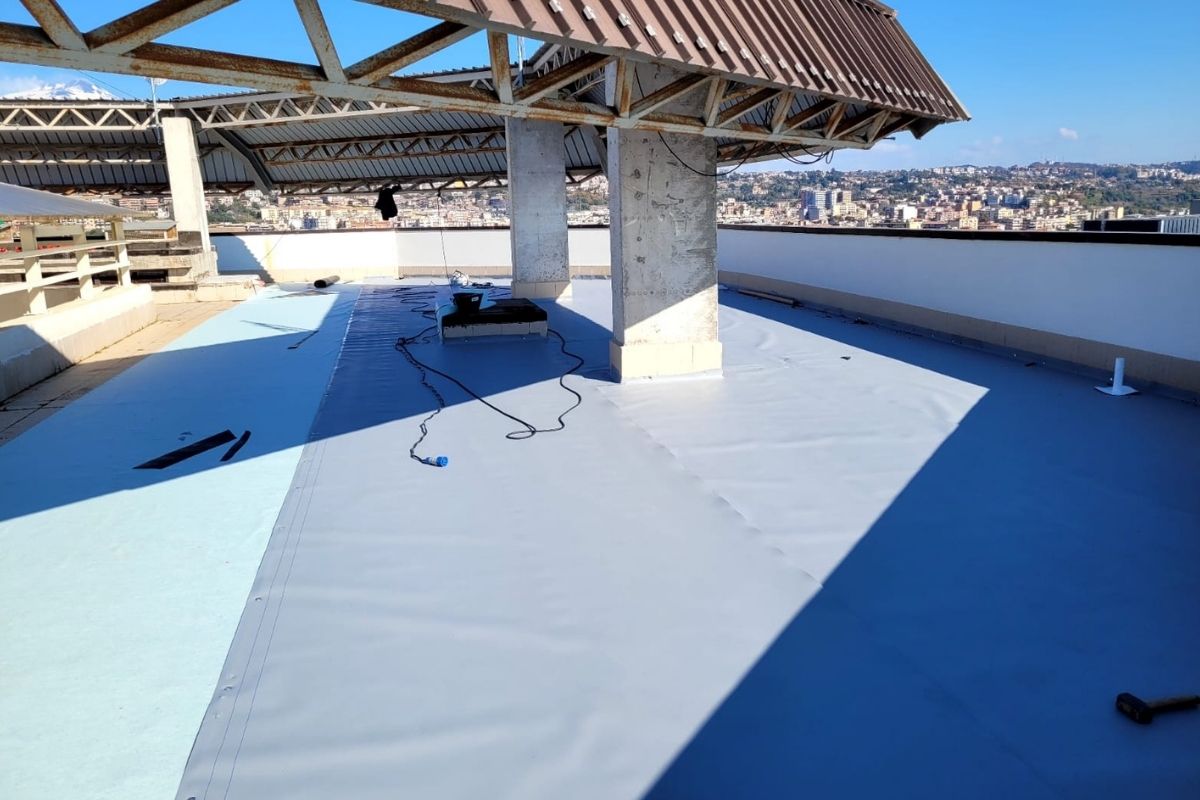
- Membrane laying
- Hot air welding of seams
- Drain and parapet detailing
- Weld inspection
- Detail examination
- Technical report before handover
The application is carried out by our own team. Quality standards are maintained throughout the process, and the system is delivered with a 5-year warranty.
5-Year Warranty
In terrace applications, a warranty does not simply mean stating a period. It means that:
- The surface analysis has been carried out correctly
- Detail solutions have been determined specifically for the project
- Welded seams have been inspected
- Application thickness has been standardized
- The process has been carried out by our own application team
Thanks to this discipline, the system is delivered under a 5-year warranty.
Start with a Technical Inspection
A single standard solution is not recommended for every terrace. The correct system is determined after surface analysis and detail inspection. Request a technical assessment to protect the surface integrity in the long term without putting the lower floor at risk.
Consider terrace waterproofing not as a temporary expense, but as a structural safety investment.
 Contact us directly by phone0212 284 4045
 Get a quick preliminary assessment via WhatsApp
 Request consultation and a technical site survey
“`