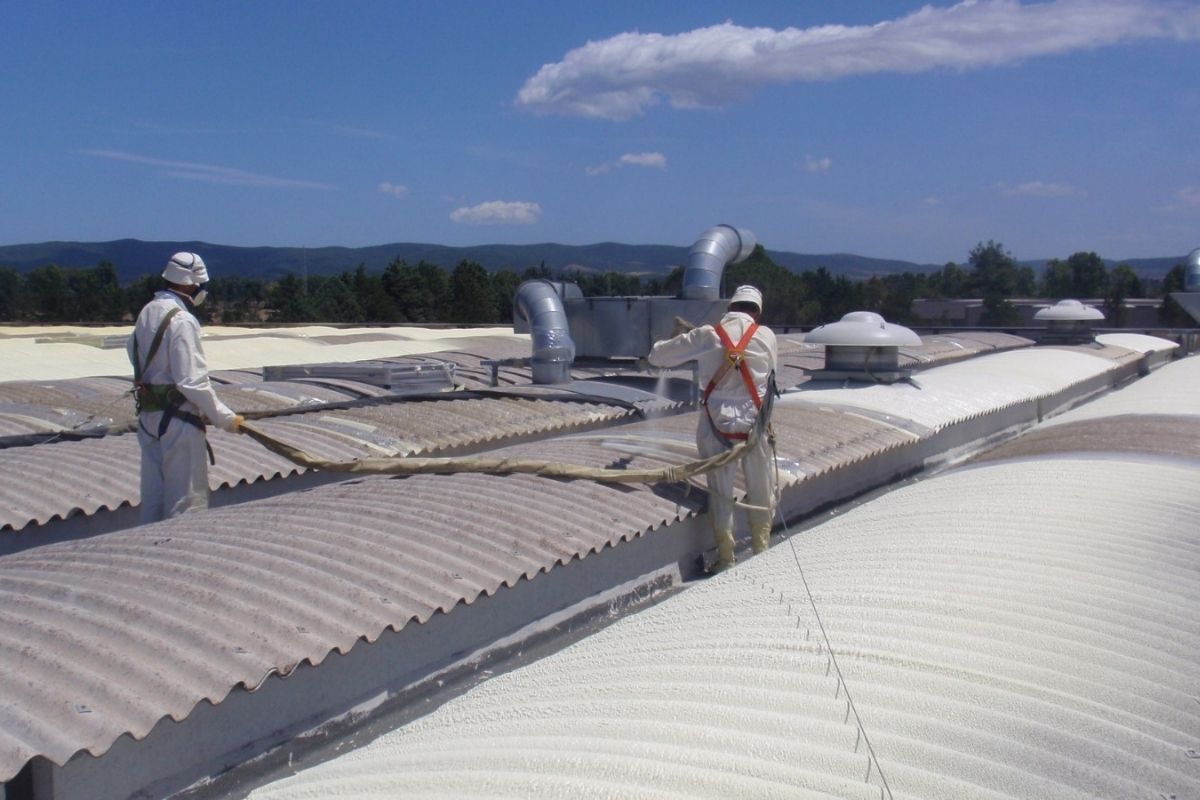
In industrial facilities, the roof is the most critical line of defense for the structure. Over time, gaps at joints, screw penetrations, and surface cracks in metal, reinforced concrete, or sandwich panel systems allow water to migrate unpredictably rather than in a controlled manner. This is not only an insulation problem; it is a production reliability problem.
Polyurea roof waterproofing is a spray-applied coating solution with high elasticity and rapid curing properties. It forms a continuous protective layer across the surface, eliminating weak points where water can penetrate.
Why Choose Polyurea Roof Waterproofing?
Which Roof Types Can It Be Applied To?
- Metal trapezoidal sheet roofs
- Sandwich panel roofs
- Reinforced concrete terrace roofs
- Renovation projects over existing membrane systems (subject to surface assessment)
Technical Performance Summary
| Technical Parameter | Typical Range | Description |
| Tensile Strength | 18 – 25 MPa | High mechanical strength and tear resistance |
| Elongation at Break | 600% – 1000% | Accommodates structural movement |
| Tear Resistance | 70 – 100 kN/m | Resistant to mechanical stress |
| Shore A Hardness | 85 – 95 | Combines flexibility with durability |
| Water Vapor Permeability | < 1 g/m²·day | Excellent waterproofing performance |
| Gel Time | 5 – 15 seconds | Rapid reaction and short application time |
| Service Temperature | -30°C / +120°C | Wide temperature resistance range |
| Application Thickness | 2 – 3 mm (roof systems) | Varies according to project requirements |
Application Process
A properly planned application not only controls water intrusion but also helps prevent costs associated with operational interruptions.
Consider roof waterproofing not as an expense, but as a long-term investment in asset protection and operational reliability.