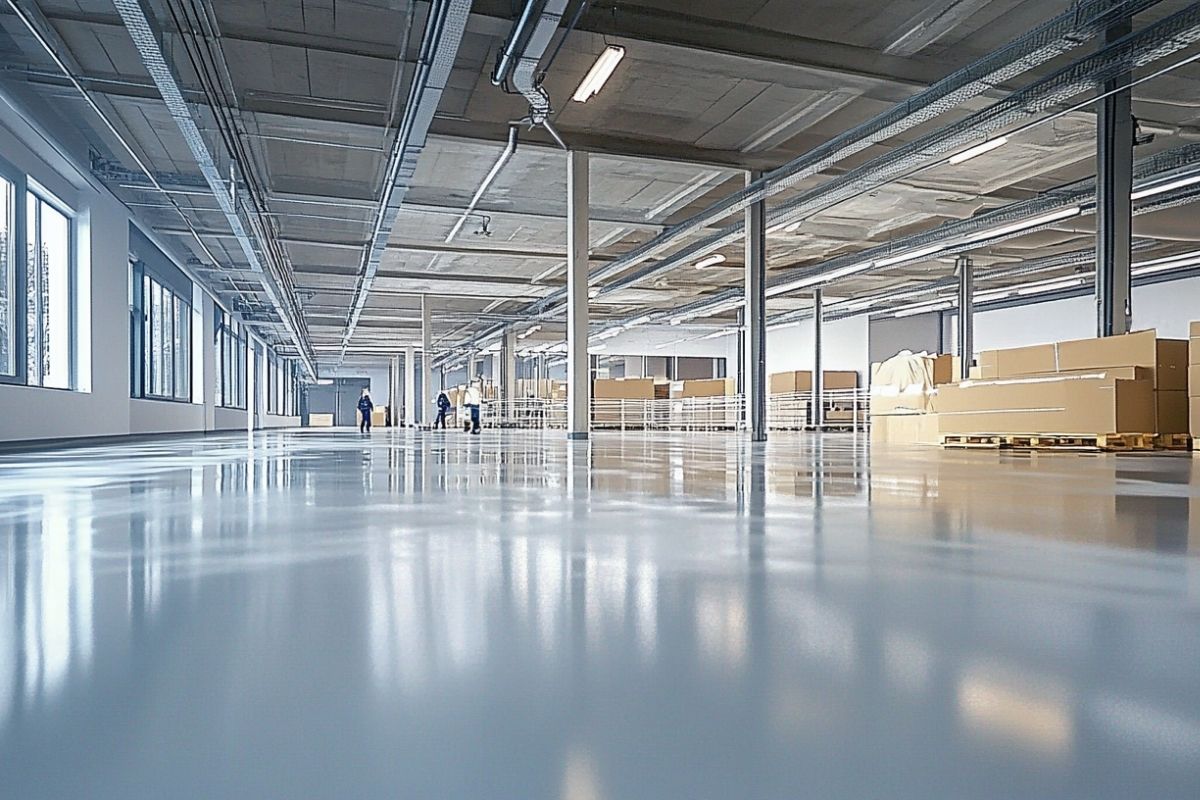
Industrial flooring is more than just a surface people walk on. Forklift traffic, heavy loads, chemical exposure, continuous cleaning, and mechanical impact all place significant stress on the floor. An improperly selected coating system often results in cracking, delamination, slip hazards, and increased maintenance costs.
Polyurea flooring for industrial facilities offers a high-performance solution thanks to its exceptional mechanical strength and rapid curing properties.
Common Problems in Industrial Floors
The most frequently encountered issues in industrial and manufacturing environments include:
- Concrete surface cracking,
- Coating delamination and peeling,
- Chemical stains and surface wear,
- Frequent maintenance requirements,
- Production losses caused by lengthy application times.
In facilities operating 24/7, floor renovation downtime is a critical concern. The cost of interrupted operations can often exceed the cost of the flooring system itself.
Polyurea helps minimize this downtime.
Advantages of Polyurea Floor Coating
Applications
- Manufacturing facilities
- Logistics and warehouse areas
- Parking structures
- Food production facilities
- Industrial plants
- Workshops
System thickness is determined according to floor type and traffic intensity.
Application Process
A systematic approach is followed in industrial flooring projects:
Technical Layer Structure
| Layer | Description |
| Concrete Substrate | C25 concrete or higher is recommended |
| Surface Preparation | Mechanical profiling and abrasion |
| Primer | Epoxy primer |
| Polyurea Coating | Typically 2–4 mm elastomeric system |
System thickness is determined according to traffic loads and operational requirements.
5-Year System Warranty
Our industrial polyurea flooring systems are provided with a 5-year system warranty.
The warranty applies to projects installed according to the recommended system thickness and intended service conditions.
Address Flooring Problems Before They Escalate
If your facility experiences:
- Recurring cracks,
- Wear caused by forklift traffic,
- Chemical staining,
- Coating delamination,
the flooring system should be re-evaluated.
Polyurea flooring provides a long-term solution through its combination of high durability and rapid installation.
Request a Technical Assessment
Flooring is not merely an aesthetic element—it is a matter of operational reliability and workplace safety.