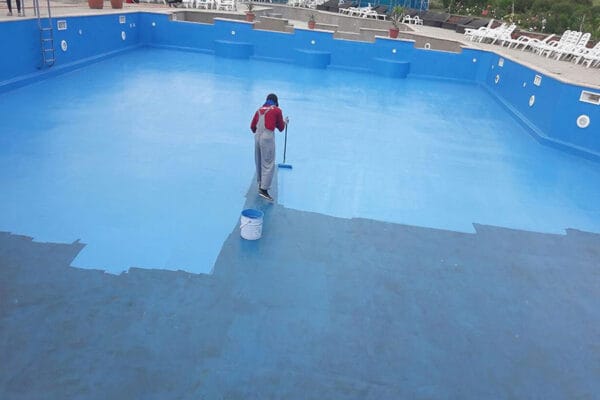
Pool waterproofing is a critical component of the construction work required when building a pool. The waterproofing of the facility is carried out quickly by applying a solid waterproof cement mortar to the walls and base of the pool, acting as a pool waterproofing and smoothing layer at a consistent time. This creates the smooth, solid and waterproof surface required for the application of tile mortars.
In order for a swimming pool to last for many years and not require constant repairs, it is essential that its structure is waterproofed in a timely manner. Pool waterproofing plays a very important role in the sealing and longevity of the pool. This is because water places significant loads on the swimming pool structure and is a factor for both its frame and all the materials used in its construction.
Pool Leaks; Over time, the constant pressure of pool water combined with fluctuations in ground pressure surrounding the pool can cause water leaks and cracks. Swimming pools are subject to tremendous internal and external forces. When a crack appears, it tends to expand and serious leaks can occur. It’s time to waterproof your swimming pool. Fortunately, Dekorizon has cost-effective solutions to the problem.
The advantages of swimming pool waterproofing compounds include:
- High degree of impermeability against water, ensuring complete water tightness and preventing water leakage,
- Ability to increase the strength qualities of surfaces,
- Good adhesion with the base material,
- Good resistance to freezing and degree of penetration of the mixture,
- Protection of the pool structure against corrosion and aggressive chemical substances,
- A convenient and simple application,
- Prevention of the spread of microorganisms and molds,
- Environmental and sanitary soundness.
The most common material used in swimming pool construction is reinforced concrete, with the benefit of positive or negative waterproofing. When designing a suitable waterproofing system for pool waterproofing, attention should be paid to both water ingress and egress. A waterproofing specialist must consider many factors, such as the grades and dimensions of the concrete structure. Is the soil retained at all elevations, what finished surfaces are intended to be waterproofed, and is it exposed to direct UV light?
The degree of insulation required for a pool waterproofing varies depending on where it sits in the building. A swimming pool over a car park or parking lot, or where diving is not important, will only require a low or medium level waterproofing system. Pools on the upper floors of buildings will require a high to very high level of pool waterproofing using spring connections and should include access to the fittings for levelling and inspection. An air gap has the advantage of increasing the waterproofing performance.
Pool waterproofing systems are individually designed and should be verified by a specialist acoustic performance to confirm fitness for purpose. Another important concern, particularly with thinner concrete elevations or sections, is the flexing of the pool lining, both when filled and emptied. Frequent filling and emptying may be required for maintenance, cleaning, replacement etc. of faulty tiles. These flexing/stressing bending events can cause the liquid to fail after application or the waterproofing types to form. This is why it is always best to drain and refill pools. One way to significantly reduce this particular risk is to specify a fully bonded, elastomeric waterproofing type applied directly to the surface, which has the necessary resistance to both water and any other substance, yet has the ability to resist cracking.
If a more rigid treatment type system is used, this will naturally increase the risk as they are more likely to break away from a structure on flex and therefore lead to waterproofing failures.
Factors to Consider When Waterproof a Pool
An important aspect to consider when insulating a pool is that the surfaces in question are usually in contact with two types of water; groundwater and water inside the pool. Due to the aggressive nature of groundwater, it is necessary to carefully assess its level and whether its presence is permanent or temporary. As for the water inside the pool, it contains chlorine and other substances that can compromise the stability of the structure. For these reasons, the walls of the pools must be carefully waterproofed and protected.
Many problems can be prevented during the planning phase of the construction or renovation of the pools. Waterproofing alone is not enough. It is very important to protect the surfaces and walls from all aggressive substances that could jeopardize their durability. Other basic elements to consider are;
- Sealing stage of castings and plant engineering system,
- Recirculation systems,
- Water filtration and lighting
In fact, all the elements mentioned above represent critical issues for correct waterproofing purposes. At this point, it is clear that we need specific products with different properties to effectively waterproof pools.
Pool Waterproofing and Crack Repair
The walls and floor of a swimming pool are subject to various leaks such as inlets, scraper throats, lighting fixtures, cleaning systems and more. All of these, plus the constant water pressure, can cause leaks. Concrete shells must be sealed to ensure that they retain water. Therefore, in hotel, club or large community pools, it is necessary to implement a pool sealing system to retain water and ensure that everyone can enjoy swimming without interruption.
There are a number of high-performance pool sealing solutions. The important thing is to use an application that is suitable for pools and their chemically treated water. A suitable sealant is reliable and guarantees a watertight seal. In addition, it is super flexible, compatible with a variety of designs and provides the perfect finish for any swimming pool.
Pool Waterproofing Application Steps
- Contaminants such as oil, dust and debris are removed from the substrate by pressure washing, sandblasting and grinding to begin with.
- All leaks, joints, seams, corners, drains and expansion/control joints that could weaken the best pool waterproofing system are then sealed. The surface is then cleaned with a wet sponge and allowed to dry before the membrane is applied.
- Once the pool waterproofing is ready, the entire surface is covered with the membrane according to the manufacturer’s specifications. It is very important to check the temperature range restrictions during application to facilitate a strong bond for the waterproofing membrane. A quality product is typically plastered in three coats.
- After a week of curing, a leak test is performed to ensure the pool is waterproof before the tile or mosaic installation can begin. However, if any water leaks are detected, there is apparently a fault that needs to be fixed with repairs.
When it comes to pool waterproofing, it is important that the job is handled by a professional team to ensure effectiveness. Dekorizon is a company that specializes in pool waterproofing with methods that provide the highest level of, reliable and long-term protection for swimming pools.
Sealed Concrete Pools

One of the most important steps in building a gunite or concrete swimming pool is choosing the right type of waterproofing. Concrete is a porous substrate that is prone to water leakage, so in addition to keeping groundwater out of the pool, it needs to be sealed.
Every swimming pool or water feature needs to be waterproofed in some way if there is a pool leak. Sometimes these structures present challenges and become difficult to waterproof due to the various leaks that are built into the design to accommodate elements such as lighting, plumbing, and drainage.
There are a variety of products available on the market today for pool waterproofing. Before any final decisions are made, the following information will help to simplify material selection and increase success rates.
Cementitious coatings and waterproofing barrier products tend to bond better to the concrete composition. Because they are similar in chemical composition and are enhanced with polymer binders. These products also allow for a variety of finishing options; plaster, coatings, and adhesives bond better to cementitious surfaces, as opposed to pure polymer waterproofing coatings.
When dealing with new pool construction, cementitious coatings are not susceptible to failure due to moisture vapor transmission, which is the rate at which water vapor passes through a material at a given temperature and relative humidity. These coatings are breathable, so they can be applied just a few days after the concrete has been poured or gunite has been placed. In contrast, pure polymer systems require the concrete to cure for at least 28 days to prevent moisture vapor transmission failure.
In swimming pool repairs, it is often difficult to completely dry the substrate before applying the waterproofing. Pure polymer coating systems cannot be applied to surfaces that are not completely dry; cementitious products are moisture tolerant. In fact, many manufacturers even require the substrate to be pre-wetted before application.
Ease of Application
When choosing a waterproof coating, keep the project in mind. For example, vinyl lined pools can be more difficult to work with if they have an irregular shape. However, larger surface areas can be covered more economically using spray equipment as opposed to applying with a trowel or brush.
If a waterproof coating is being applied to an irregular substrate (for example, faux stone paving in a pond or waterfall feature), being able to apply the coating with a brush or roller will make it easier to ensure that all corners and corners are covered. Additionally, coatings that can be applied by hand do not require expensive sprayers or air compressors.
If the pool owner desires a certain aesthetic appearance, it is important that the waterproof coating or membrane allows for what the pool owner wants. Remember that not all coatings are compatible with all adhesives, plasters or other finishes. Since tiles and pool plasters are not waterproof, it is extremely important to use a waterproofing membrane underneath them to extend the life of the pool.
Without a waterproofing product, the potential for water leakage and seepage increases significantly. Leaking can cause water loss, damage the environment (if the pool is suspended), and ruin the plaster/finish paint. Additionally, the rebar/reinforcing steel in a concrete or gunite pool can also be damaged.
Resistance Pressure
One of the most important factors to consider when choosing a waterproofing product is its ability to withstand negative hydrostatic pressure, which is the pressure of water passing through the substrate and pressing on the back of the liner.
Remember, the liner is working to hold water in; however, its job is to ensure that groundwater does not interfere with or cause the liner applied to the interior of the pool.
As groundwater or rainwater accumulates, it can pass through the exterior of the concrete pool shell, creating negative hydrostatic pressure behind the liner. When water gets to the liner, it is literally trying to push the liner away from the surface. Flexible liner can bulge under this type of pressure and will often fail. To counteract this, it is important to use a base or first layer that can withstand negative hydrostatic pressure when building an inground swimming pool.
Water Sanitation Method
Proper water chemistry is essential to ensuring safe and consistent swimming pool operation. In fact, the sanitation method used in the swimming pool is an important factor to keep in mind when selecting the pool sealant and finish. In cases where the waterproofing is also the finished wear apron (i.e., under plaster where it is protected from direct water contact and exposure to chemicals), it is even more important that the coating is resistant to the environment.
Private pools typically have a chlorine content of one to three parts per million (ppm), while in commercial or public pools, levels can be as high as 15 ppm to combat bacterial growth. In addition to chlorine, ozone and bromine are also used to combat bacteria, and all three can potentially cause pool coatings to deteriorate. They can break, discolor, and pit due to chemical attack.
Is There a Water Leak? Is Your Pool Leaking?
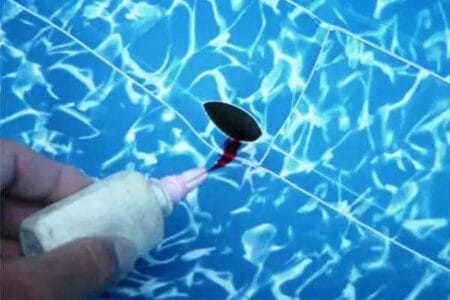 Leaks and leaks in swimming pools often develop gradually and can be difficult to detect. If you have an automatic refill device, you may not notice anything when your water bill increases significantly. If you live in a warm climate, you may attribute drops in water levels to evaporation alone. If you are unsure, a simple “bucket test” can help you determine if there is a problem that needs to be fixed:
- If you have an automatic filler, turn it off.
- Fill a bucket with water and mark the water level.
- Mark the water level in the pool.
- Place the bucket on the first or second step of the pool (this will equalize the conditions in the bucket and the pool).
- Let it sit for 24-48 hours.
Theoretically, the water in the pool and the bucket will evaporate at the same rate. So if the level in the pool drops more than the water level in the bucket, you may have a leak. This is not a completely accurate test, but if you see a significant difference, it’s probably time to call a professional. Other signs of a leak include:
- Cracks in the pool liner indicate settled soil. This causes cracks in pools.
- Pudding of water outside the pool with no other explanation.
- If you are having to use more chemicals in your pool than you used to, it may be because your pool water is being replaced at a faster rate due to leaks.
How to Find Leaks in Your Pool
Water leak detection in swimming pools is a step by step process of elimination between 4 main areas; Pool Liner, Pool Lights, Pool Plumbing and Pool Equipment.
Pool Liner Leaks
- Vinyl pools have the most fragility in this area, with the potential for small tears in the vinyl or leaks around intentional cuts for lights, steps, skimmers and drains.
- Concrete pools can leak through a crack in the liner, most commonly a very small gap coming through the wall at the tile line or at the interface of the plastic skimmer and the concrete pool wall.
- Fiberglass pools can also leak through a crack in the liner, like a concrete pool, or at the scoop, return, drain or light face.
- To find leaks in the pool liner, shut off all plumbing lines (skimmer, main drain, returns).
- You can use a rubber or threaded plug (the kind used for winterizing). Turn the pump off at the switch so it doesn’t turn on while the lines are plugged in. You may also need to wait for the pool water level to drop, as you may need to drain the pump for a few days if it continues to drop. Once the water level has stabilized at the lowest level, raise the water level to the normal level before starting this test to avoid confusion.
- Most of the time, if the leak is big enough, it will quickly drop to the problem area and level out. This could be right under the skimmer, or just under the returns, or at the pool light. If the pool water level continues to drop with all the lines closed, you can rule out underground plumbing (your biggest fear). However, once you plug in the pipes and turn off the pump, the leak will stop.
- If the water level appears to be steady (remember that unless you completely cover the pool with a solar blanket, evaporation will continue and you will need to subtract rainfall amounts), you can begin to closely inspect the waterline area.
- When your pool liner or vinyl liner leaks, you will often see small pieces of debris that have sunk into the crack or torn through the vinyl. To confirm a leak in a suspected area, use food coloring or a dye syringe to test the area with the dye.
- Testing the dye is done with the pump off to reduce currents. Pour a small amount of test dye near the area to see if it moves and is sucked through an orifice.
Pool Skimmer Leaks
- One of the most common areas in an in-ground pool, water leaks can occur inside the skimmer body or in the side walls of the skimmer, usually caused by freeze damage or excessive ground movement in the winter.
- On vinyl liner pools, the faceplate and gasket are always the first suspects and can be dye tested as described above. Rust on the skimmer faceplate or vinyl liner can be a sign of a leak and can cause rust to form on the pool walls, which can damage the liner and walls.
- All vinyl pool wall and deck fittings have two gaskets, one under the liner and one over the liner. It is important to replace both faceplate gaskets and if you need to make changes, be sure to use only stainless steel faceplate screws. Other screws may not tighten properly and may rust.
- For concrete pools, look inside the pool where the pool deck meets the plastic skimmer front. Inspect for cracks and debris stuck in the crevices. A paint test will usually confirm a leak on one or more of the three sides, directly where the concrete pool meets the plastic skimmer, which is changing at varying speeds and shrinking at different rates.
Pool Light Leaks
- The pipe that carries the lamp cord from the light niche to the light junction box is not sealed and can break from shifting ground or frost damage.
- If your pool water has dropped below the water level, below the returns and is fixed at the top of the pool light, you likely have a leak in the pool light channel behind the pool light.
- Pipe leaks are difficult to test effectively, so when a pool light leaks, the usual repair is to seal the opening where the light cable exits the niche and enters the pipe.
There are 3 ways to close the light channel and you can do it underwater without draining the pool, but if the water level is low, it may be easier:
- With a golf ball sized piece of mixed pool putty, create a mound around the cord as it enters the drain. Press it down onto the cord and seal it tightly. Cure with the light on the deck for 2 days before replacing the lamp. This can be done underwater with a mask.
- With a 100% silicone tube, squirt into the light channel and the end of the channel to seal the water outlet. After a good silicone plug is made, let the light on the deck dry for 2 days before installing the light into the niche.
- Use a product called a Light Cord Stopper. This is a plastic plug that fits around the cord; push it into the channel, creating a quick seal. This method is preferable if you need to replace the light down the road, as you won’t have to deal with the hassle of removing putty or silicone from the pipe, which can be difficult to remove.
Reasons to Fix Pool Leaks: Pool leaks not only waste your treated and heated pool water, but can also lead to other problems such as rusted pool walls, a sand pool floor, erosion of your pool deck or the supporting soil beneath your pool equipment.
How to Insulate a Pool
If you need to waterproof your swimming pool, there are many effective products on the market:
- Pool liners are UV treated that cover the entire pool, ideal for areas around an above ground pool where ground movement may be an issue.
- Pool paints include chlorinated rubber and 2-pack epoxy paints. It is important to choose a paint designed for use in swimming pools and use it as directed or have a professional do the job for you.
- Resin-based waterproofing products are specifically designed to fill cracks in swimming pools. They are carefully injected into the cracks. Once cured, they remain elastic, so they can expand and contract with more movement in and around the crack. In some cases, a harder epoxy resin may be required. The most appropriate product for your pool should be determined by a professional pool repair professional.
- Cementitious coatings are cement-based mortars and paints that contain special additives that provide excellent waterproofing. They can be applied by brush or spray. Decorative top coats can be applied for pools.
If you have a tiled pool, if you choose to repair the leak and water leak rather than re-glaze the entire pool, you will likely need to remove and replace some tiles to get to the source of the leak. It is best to seek professional advice and assistance in waterproofing your pool, regardless of the solution you use.