Reinforced concrete pools may appear structurally solid, but they always carry risk under water pressure. The first crack or water leak does not only mean water loss; it can lead to structural deterioration, damage to surrounding areas, and costs caused by operational downtime.
For this reason, PVC membrane lining for reinforced concrete pools should not be considered merely a waterproofing choice, but a critical investment for the long-term and safe use of your pool.
Most Important Risks in Reinforced Concrete Pools
The interaction between concrete and water can turn small issues into major damage over time.
Water damage progressing within the substrate.
- Stress caused by temperature and moisture differences
- Cracks that develop over time on reinforced concrete surfaces
- Pores that deepen under water pressure
Both maintenance cost and operational disruption.
- Chemical balance of pool water
- Chlorine and similar disinfectants
- Concrete fatigue accelerated by water leakage
Insufficient detailing can create leakage points.
- Corner and edge junctions
- Steps, skimmers, and coping details
- Joints and transition points
What Does PVC Membrane Lining Provide?
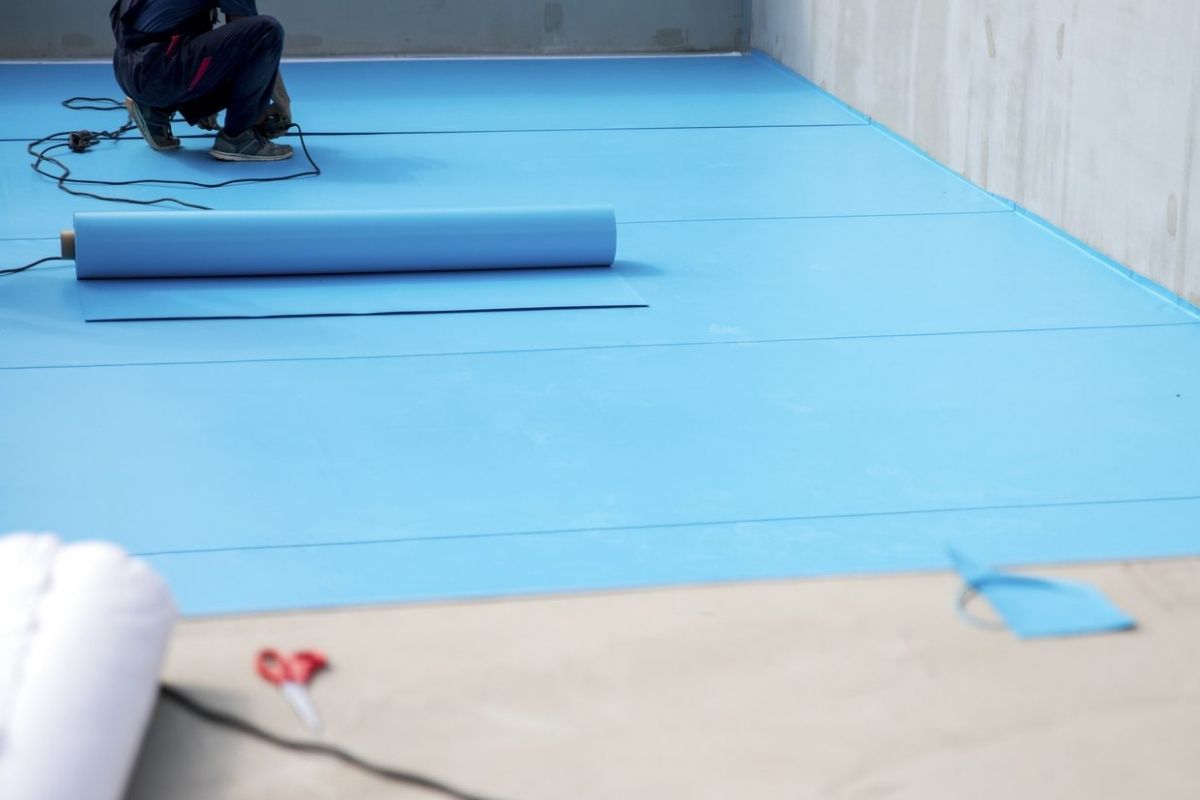
PVC membrane offers a flexible, durable waterproofing system that covers all detail points on reinforced concrete surfaces.
| Waterproofing | Secure Seam Integrity | Long-Term Durability |
| Provides a continuous water barrier over reinforced concrete | Seams are joined using hot-air welding | Resistant to UV exposure and chemical effects |
| Prevents leakage through micro-cracks | Secure detailing at corners, coping, and transitions | Reduces maintenance requirements |
| Prevents pool water from damaging the structure | Ensures integrity at critical detail points | Extends the service life of the pool |
This allows the pool to remain protected for a long time, both functionally and aesthetically.
Application Process
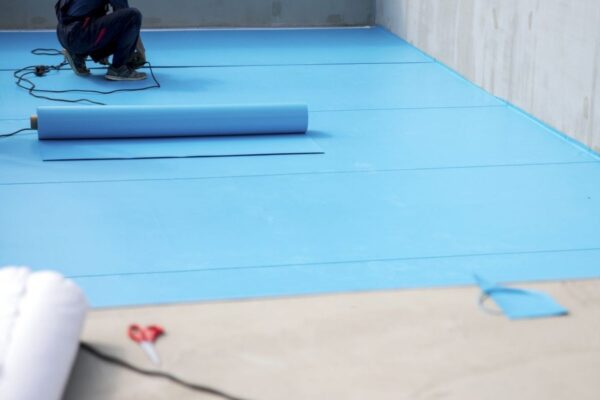
Membrane application on reinforced concrete pools requires proper surface preparation and detailed control.
- Inspection of cracks and pores on the concrete surface
- Evaluation of edges and critical detail points
- Required repairs and corrections
- Creating a smooth and stable surface
- Application of the required primer or intermediate layer
- Uniform and controlled seam welding
- Secure connection of seams and detail points
- Application around steps, skimmers, and coping details
- Watertightness testing
- Inspection of critical connection points
Proper planning secures the entire pool surface.
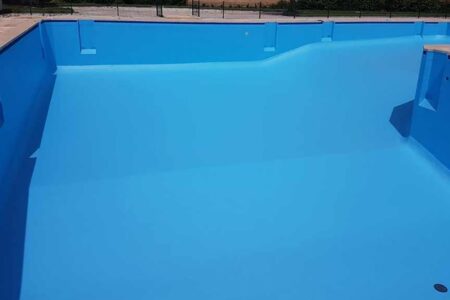 Reinforced concrete pool applications can become risky due to detailing mistakes and incorrect seam welding. Our own teams understand surface behavior, apply details with precision, and directly control the process.
The warranty provided is based on disciplined on-site application and secures the long-term use of the pool.
Suitable Applications
- Private villa pools
- Residential complex and residence pools
- Sports and recreation facilities
- Hotel and resort pools
- Water storage pools for industrial or production facilities
Every reinforced concrete pool type is different; the solution is planned according to the existing structure.
Consider This Before Making a Decision
Even a small leak in a reinforced concrete pool can rapidly increase repair costs and cause usage disruptions. A properly planned and professionally installed PVC membrane system eliminates both water loss and structural risk.
Technical Assessment and Proposal
Let us analyze the current condition of your pool on site. We will technically identify risky points and detailing requirements, then present a project-specific PVC membrane lining solution in a clear and applicable way.
Consider PVC membrane lining for reinforced concrete pools not as an expense, but as long-term investment protection for your pool.
Contact us for a technical survey and quotation.
 Contact us directly by phone0212 284 4045
 Get a quick preliminary assessment via WhatsApp
 Request consultation and a technical site survey