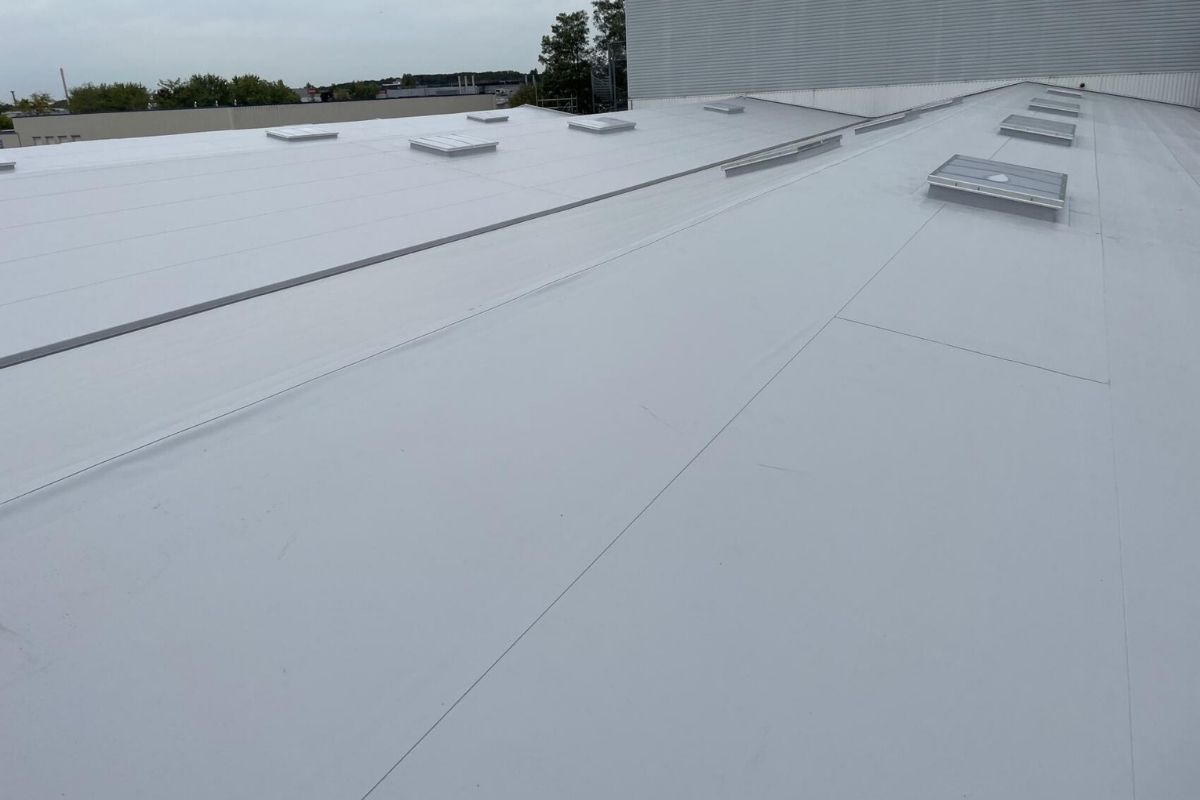
A factory roof is the most critical protective layer above your production operations. Beneath it are machinery, production lines, raw materials, and scheduled delivery commitments. A roofing issue is not simply a water intrusion problem—it can lead to production interruptions, equipment risks, and costs associated with operational downtime.
For this reason, the system selected for factory roofs must provide more than waterproofing. It must deliver the durability required to maintain operational continuity. PVC membrane systems are among the solutions designed to meet this need.
Most Critical Risks on Factory Roofs
Roofing systems on industrial facilities are continuously exposed to temperature fluctuations, vibration, and mechanical stresses.
- Daily temperature fluctuations
- Thermal expansion across large roof surfaces
- Gradual weakening of seam areas over time
- Roof-mounted installations
- Maintenance traffic
- Localized loading conditions
- UV exposure
- Layer separation
- Increasing reliance on temporary repairs
What Does a PVC Membrane System Provide for Factory Roofs?
PVC membranes provide a controlled waterproofing solution for large-scale and dynamic roofing structures.
3 Key Advantages
- Flexibility to adapt to thermal expansion and contraction
- Reduced stress on the roofing system
- Improved long-term performance
- Hot-air welded connections
- Consistent and homogeneous seam integrity
- Testable waterproof performance
- Resistance to UV exposure
- Protection against environmental conditions
- Reduced maintenance requirements
| Adaptation to Thermal Movement | Strong Seam Welding | Long-Term Durability |
| Flexible structure accommodates expansion and contraction | Seams are joined using hot-air welding | Resistant to UV exposure and environmental factors |
| Reduces the risk of cracking on the roof | Provides homogeneous seam integrity | Minimizes frequent maintenance requirements |
| Ensures stable performance across large roof areas | Provides reliable solutions at critical details | Reduces operational risk |
This approach transforms a factory roof from a surface requiring ongoing repairs into a systematically protected asset.
How Do We Manage the Application Process?
Roofing work on active industrial facilities requires progress without disrupting production operations.
- Evaluation of existing roofing layers
- Structural support system inspection
- Drainage and slope assessment
- Reinforcement of areas requiring repair
- Removal of loose or deteriorated layers
- Mechanical fastening or project-specific installation method
- Controlled welding of membrane seams
- Secure treatment of perimeter and detail areas
- Seam testing and verification
- Final inspection of critical details
Once completed, the roof is not merely covered—it becomes an additional layer of protection for your production operations.
Why Do We Use Our Own Installation Teams?
Factory roofing projects are not a place for trial and error. Every detail requires experience, technical knowledge, and discipline. We perform all installations using our own teams and maintain direct control over the entire process.
Which Types of Factory Roofs Are Suitable for PVC Membranes?
- Steel structure roofing systems
- Sandwich panel roof assemblies
- Reinforced concrete roof surfaces
- Renovation projects over existing membrane systems
Every factory facility has unique structural and operational requirements. The waterproofing solution is planned accordingly.
Consider This Before Making a Decision
Your roof may not be leaking today. But how many more years can the current system maintain the same level of performance? A roof that requires frequent maintenance carries hidden risks. A properly designed and professionally installed PVC membrane system provides long-term protection and reliability.
Technical Assessment and Proposal
Let us inspect your factory roof on site. We will identify critical risk areas through a technical evaluation and provide a project-specific solution backed by a warranty and a clear implementation plan.
Consider PVC membrane installation for factory roofs not as an expense, but as an investment in production continuity and long-term asset protection.
 Contact Us Directly by Phone0212 284 4045
 Get a Quick Preliminary Assessment via WhatsApp
 Request Consultation and a Technical Site Survey